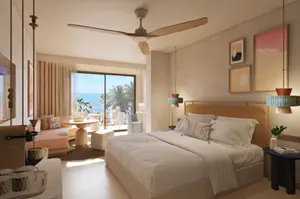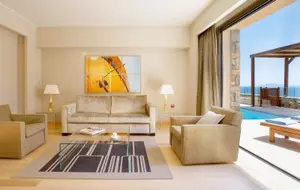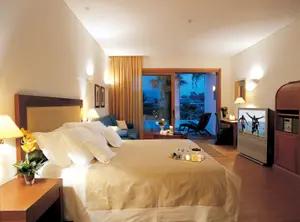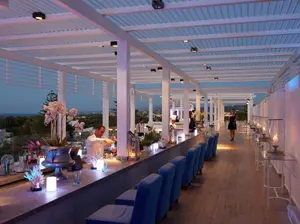
Rosewood Blue Palace
When you book Rosewood Blue Palace in Crete, Greece, through our Rosewood Elite partnership, your stay includes daily breakfast for up to two guests. You also receive a one-category room upgrade when available. No premium credit card or membership needed: request a quote and our advisor books it at the same rate as booking direct.
Exclusive Booking Perks
These perks are included with your stay at the same rate as booking direct with the hotel.
- Elite benefits vary by property, but may include:
- Daily breakfast for up to two people per bedroom
- Complimentary one-category upgrade at booking or upon arrival (varies by hotel)
- Amenity from property's Managing Director
- Additional property-specific enhanced amenities, listed on the hotel's Elite site
Location
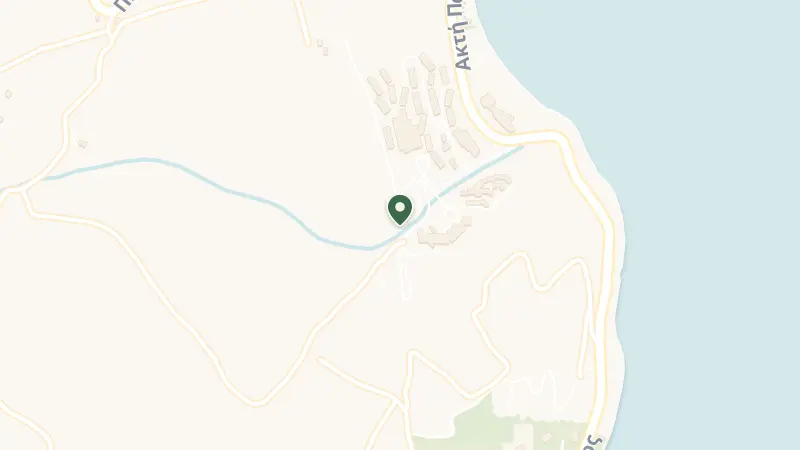
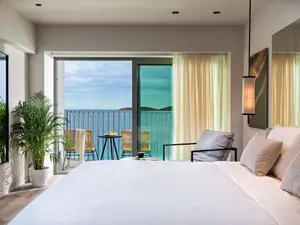
Rosewood brings its philosophy of "A Sense of Place" to Crete's northeastern coast, where the property overlooks the Bay of Elounda and the fortified island of Spinalonga beyond. This is a brand known for cultural rootedness: residential-style suites, Asaya wellness programming, and a restrained approach to luxury that honors local heritage. The setting here is defined by proximity to some of the Mediterranean's most significant archaeological narratives.
Crete was the cradle of Europe's first advanced civilization, the Minoans, whose palatial centres flourished from 2700 to 1420 BCE before the Mycenaean expansion. The island's northern coastline meets the Sea of Crete, while the Libyan Sea defines its southern edge. In the village of Elounda, the pace is unhurried. Fishing boats bob in the marina three kilometres away. The scent of wild thyme drifts from the hills.
Heraklion, the island's capital, sits 50 kilometres west. The nearest airports are Sitia at 35 kilometres and Heraklion International at 50 kilometres, both connected by coastal roads that wind through olive groves and stone-walled terraces.
Plaka, just over a kilometre north, is a fishing hamlet where tavernas serve octopus grilled over charcoal and horta dressed in lemon. The beach here is a narrow crescent of sand with views across to Spinalonga, the Venetian fortress turned leper colony until 1957. Kolokitha, four kilometres away, offers a more secluded stretch of coastline accessible by boat or trail. For golf, Porto Elounda Golf & Spa Resort lies six kilometres inland. Book a morning round before the midday heat settles over the fairways.
The newly inscribed Minoan Palatial Centres UNESCO site, 76 kilometres away, comprises six archaeological locations that reveal the material culture of Bronze Age Crete: frescoes, Linear A script, storage pithoi. Closer to the property, the nature reserve at Oxia (Agiou Nikolaou Elountas), six kilometres distant, protects scrubland habitat where wild goats graze. The town of Agios Nikolaos, twelve kilometres south, wraps around Lake Voulismeni, a small brackish lake connected to the sea by a narrow channel. Its waterfront cafes serve bougatsa, the custard-filled phyllo pastry that defines Cretan breakfast.
July and August bring cloudless skies and sea temperatures that hover near 25°C. The light is unrelenting, turning the Bay of Elounda a saturated cobalt. Afternoons slow to a crawl.
Spring arrives in March with wildflowers across the hillsides and temperatures in the low twenties. May is ideal: warm enough for swimming, cool enough for archaeological site visits before the crowds descend. Autumn stretches into October, when the sea remains warm and the stone villages glow amber in the lower-angled light.
Winter is mild by northern European standards, though December and January bring occasional rain and temperatures that dip below ten degrees at night. The island takes on a quieter character. Locals gather in tavernas for slow dinners of lamb and stamnagathi, the bitter greens that grow wild across Crete.
Frequently Asked Questions

Quotes are personally reviewed by Natasha Hardy, founder of The Uncommon Traveller
5.0 rating · 8 Google reviewsThere is no fee or markup. The hotel pays our commission.
Request a Quote