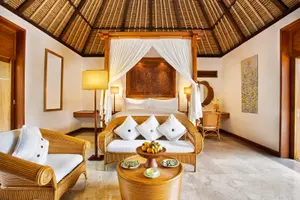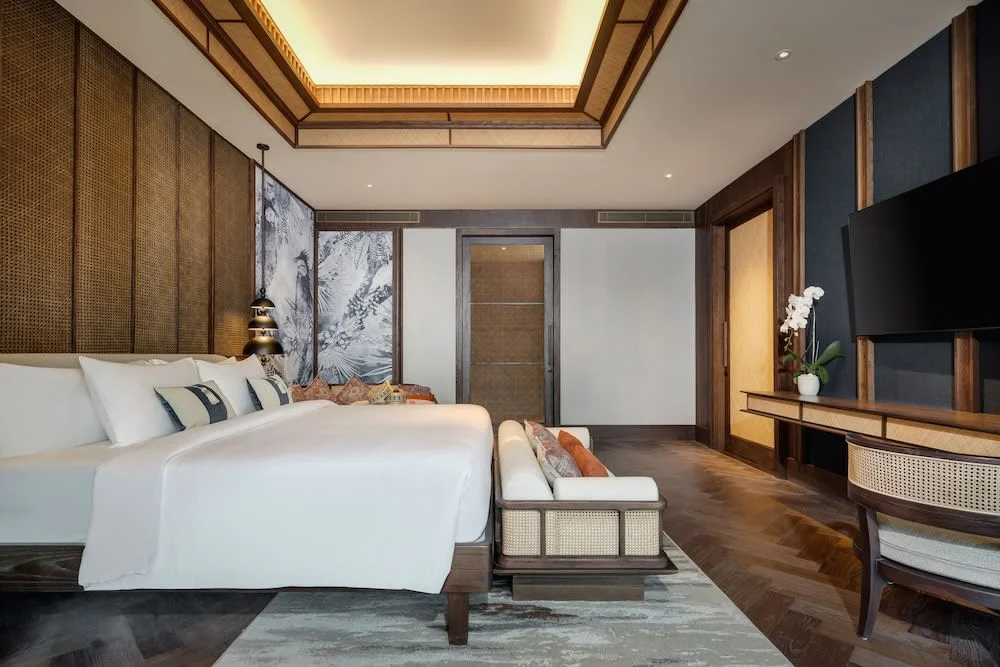
The Meru Sanur
When you book The Meru Sanur in Bali, Indonesia, through our Preferred Platinum partnership, your stay includes daily breakfast for two and a $100 hotel credit per stay. You also receive a room upgrade when available. No premium credit card or membership needed: request a quote and our advisor books it at the same rate as booking direct.
Exclusive Booking Perks
These perks are included with your stay at the same rate as booking direct with the hotel.
- Breakfast for Two Daily
- $100 Hotel Credit per Stay (to be used on services such as spa, dining, or selected amenities valued at $100 or more)
- Room Upgrade (subject to availability)
- Priority Check-in and Check-out (subject to availability)
Guest feedback
9.8/10 from 30 guest reviews
By category
Guests liked
- Amazing service
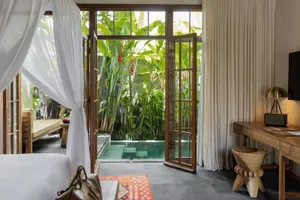
- Comfortable rooms
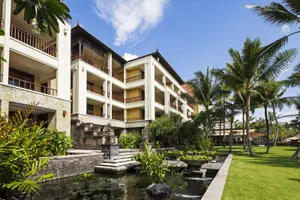
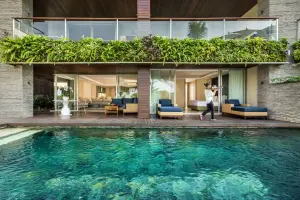
- Beautiful location
Points to consider
- Check-in delay
- Boring breakfast after multiple nights
Location
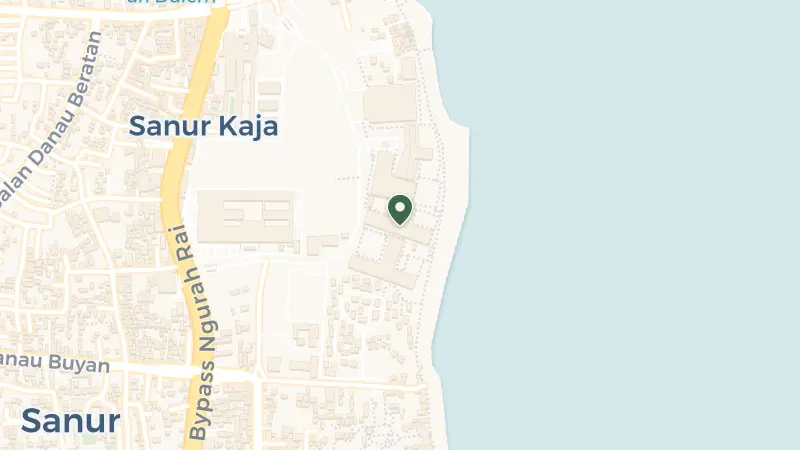
Sanur stretches along Bali's southeastern coast, a seaside village that has kept its measured pace even as much of the island accelerated into overdrive. The shoreline here is calm, protected by an offshore reef that turns the ocean into a wide, gentle lagoon at low tide. Mornings begin with jukung fishing boats gliding out from the beach, their outriggers painted in stripes of blue and red, and temple processions winding through the banyan-shaded streets. This is where Bali's tourism story began in the 1960s, when artists and anthropologists settled here for the light and the quiet, and that sense of unhurried discovery still lingers.
The neighbourhood unfolds along Jalan Danau Tamblingan, a boulevard lined with warungs, galleries, and textile shops where batik hangs on wooden racks and gamelan music drifts from open doorways. Pura Blanjong, a ninth-century temple with a stone pillar inscribed in Old Balinese and Sanskrit, sits a short walk inland, marking Sanur as one of the island's oldest continuously inhabited settlements. The beachfront path, a paved promenade that runs the length of the village, is where locals walk at dawn and kites rise into the trade winds each afternoon.
Ngurah Rai International Airport lies thirteen kilometres south, connected by a thirty-minute drive through rice paddies and coastal roads that skirt the edge of Denpasar.
Sanur's reef-protected waters are best explored by stand-up paddleboard at sunrise, when the lagoon is glassy and the fishing boats set out in formation. The Museum Le Mayeur, five minutes' walk north along the beach path, preserves the studio and home of Belgian painter Adrien-Jean Le Mayeur, whose portraits of his Balinese wife and the island's dancers line the walls in a 1930s pavilion overlooking the sea. Book a table at one of the beachfront warungs for grilled ikan bakar, snapper rubbed with sambal matah and wrapped in banana leaf, eaten at low tables with your feet in the sand.
Forty-nine kilometres north, the rice terraces of Jatiluwih form part of Bali's UNESCO-listed subak system, centuries-old cooperative water management guided by the Tri Hita Karana philosophy of harmony between humans, nature, and the divine. The terraces cascade down volcanic slopes in shades of emerald and chartreuse, fed by stone channels and punctuated by small shrines. Ubud, the island's cultural heart, lies thirty kilometres northwest, where the Sacred Monkey Forest shelters long-tailed macaques among moss-covered temples and strangler figs.
The dry season, from May through October, brings steady southeast trade winds and temperatures hovering near 29°C, the air warm but not oppressive. Mornings are bright, the light sharp and clear over the water, and the rice paddies inland turn golden as the harvest approaches. July and August are the driest months, when the island's ceremonies fill the calendar and visitors outnumber locals on the beaches.
The wet season arrives in November and builds through February, with afternoon downpours that drum on tin roofs and turn the streets into rivers for an hour before clearing. The air grows heavier, thick with the scent of frangipani and wet earth, and the rice terraces glow an almost violent green. March and April mark the transition, when the rains ease but the landscape still holds the lushness of the monsoon.
Visit between April and October for the most reliable conditions, though the shoulder months of April, May, and September offer warmth without the peak-season crowds and lower humidity than the heart of summer.
Frequently Asked Questions

Quotes are personally reviewed by Natasha Hardy, founder of The Uncommon Traveller
5.0 rating · 8 Google reviewsThere is no fee or markup. The hotel pays our commission.
Request a Quote