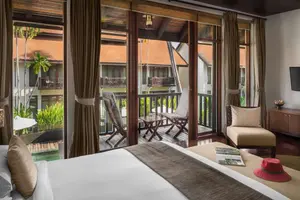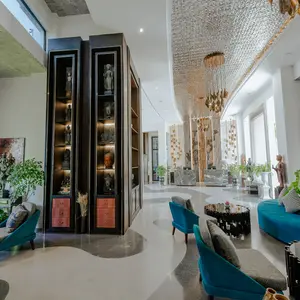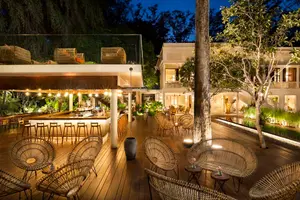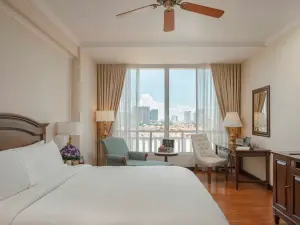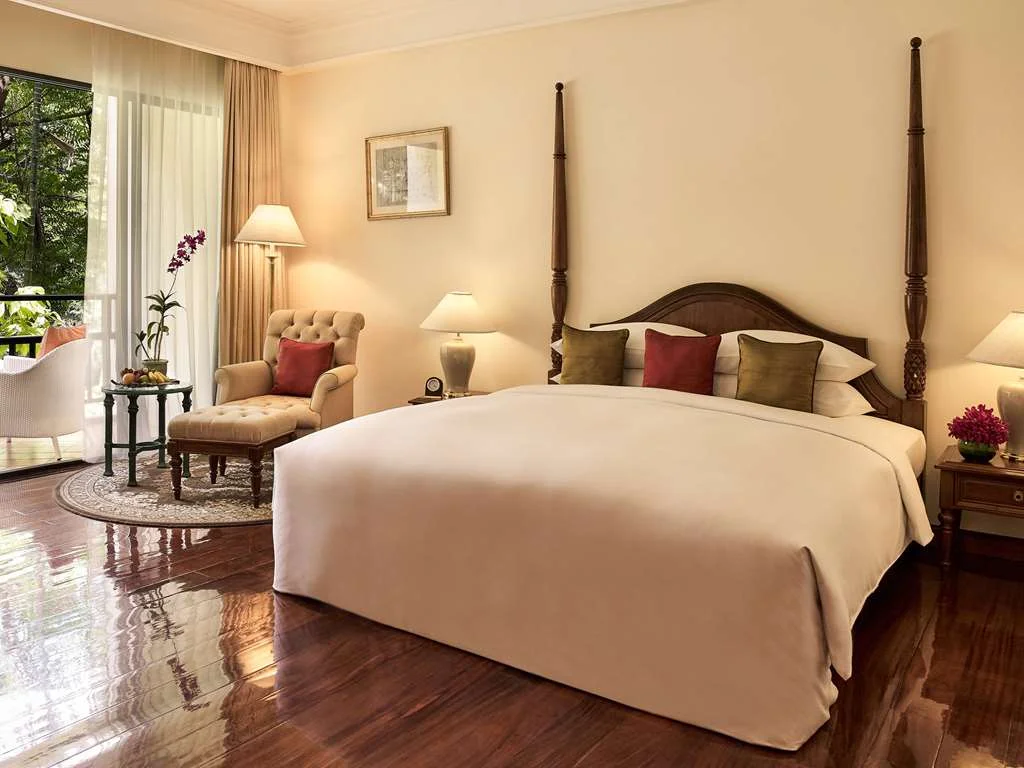
Sofitel Angkor Phokeethra Golf & Spa Resort
When you book Sofitel Angkor Phokeethra Golf & Spa Resort in Siem Reap, Cambodia, through our Accor Hera partnership, your stay includes daily breakfast for two and a $100 USD hotel credit. You also receive a room upgrade when available. You continue earning ALL Accor points and elite night credits. No premium credit card or membership needed: request a quote and our advisor books it at the same rate as booking direct.
Exclusive Booking Perks
These perks are included with your stay at the same rate as booking direct with the hotel.
- Daily complimentary breakfast for 2, per room
- $100 USD credit to be spent on property (conditions defined at check-in)
- Early check-in & late check-out (upon availability)
- Upgrade at time of check-in (upon availability)
Guest feedback
9.6/10 from 315 guest reviews
By category
Guests liked
- Exceptional hospitality
- Beautiful gardens
Points to consider
- High mini bar prices
- Disappointing food choices in some areas
Location
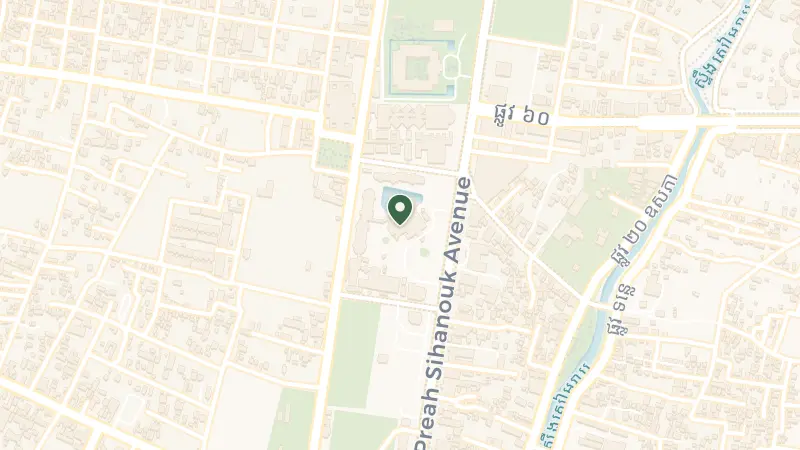
Sofitel cultivates a signature fusion of French refinement and regional character across its properties, and here that duality takes on particularly compelling dimension. Siem Reap emerged as a quiet river settlement in the shadow of the Khmer Empire's sprawling capital at Angkor, and while the temples draw millions annually, the city itself retains pockets of colonial grace and market-town vitality. French shophouses line the Old French Quarter, their shuttered facades painted in fading pastels, while the Old Market hums with vendors selling palm sugar, silk kramas, and bundles of lemongrass.
The property sits within reach of Phsar Deum Kralanh, a kilometre away, where morning trading begins before dawn and the scent of grilled fish mingles with incense smoke. Farther out, the archaeological zone unfolds: Ta Prohm, where silk-cotton trees buckle sandstone galleries; Banteay Srei, its rose-pink laterite carved with devatas so delicate they seem almost lace-like; and Phnom Bakheng, a ninth-century temple mountain where sunset crowds gather on tiered sandstone platforms.
Siem Reap–Angkor International Airport lies thirty-nine kilometres northeast, connected by modern highway. The city earned designation as ASEAN City of Culture for 2021–2022, recognition of a living heritage that extends well beyond the temple circuit into traditional Apsara dance, silk weaving villages, and the fishing communities that ring Tonlé Sap.
The temples demand early starts: Angkor Archaeological Park, seven kilometres distant and inscribed as a UNESCO World Heritage Site in 1992, sprawls across four hundred square kilometres of forested plateau. Pre Rup catches first light on its brick-red towers, while Ta Prohm's strangler fig roots create cathedral vaults over half-collapsed corridors. Banteay Srei, built in 967 and renowned for its pink sandstone and intricate relief work, sits beyond the main circuit but rewards the drive. Preah Khan, a monastic complex with labyrinthine galleries, sees fewer tour groups by late afternoon. Book a private guide who can unlock the iconography: the churning of the ocean of milk, the battles of Suryavarman II, the transition from Hindu to Buddhist symbolism under Jayavarman VII.
Back in Siem Reap, Phsar Leu Thom Thmei Market, just over two kilometres away, offers everyday commerce untouched by souvenir stalls: bundles of prahok (fermented fish paste), rice-paper rolls, and jackfruit piled high. For golfers, Angkor Golf Resort lies under five kilometres south, its fairways threading between rice paddies. The Nature Discovery Center of Cambodia, operated by Fauna in Focus and located less than three kilometres from the property, introduces visitors to regional wildlife conservation efforts, a quieter counterpoint to the stone grandeur of Angkor.
November through February brings Siem Reap's dry season, when temperatures hover near thirty degrees and the light turns sharp and golden across the temple stones. Mornings break cool enough for comfortable exploration before the midday sun climbs. This is peak season: the moats around Angkor Wat fill with mirror-still reflections, and the countryside glows with harvested rice stubble.
March and April push past thirty-three degrees, the air thickening before the monsoon. Dust devils rise from laterite roads, and afternoon shade becomes essential. The rains arrive in May and build through September, transforming the landscape into lush green, the baray reservoirs brimming and the Tonlé Sap swelling to several times its dry-season size.
October sees the heaviest downpours, but also the most dramatic skies: towering cumulus clouds above temple spires, sudden clearing light that saturates the sandstone. By late November the rains taper, leaving the moats full and the forest canopy still verdant before the dry months return.
Frequently Asked Questions

Quotes are personally reviewed by Natasha Hardy, founder of The Uncommon Traveller
5.0 rating · 8 Google reviewsThere is no fee or markup. The hotel pays our commission.
Request a Quote