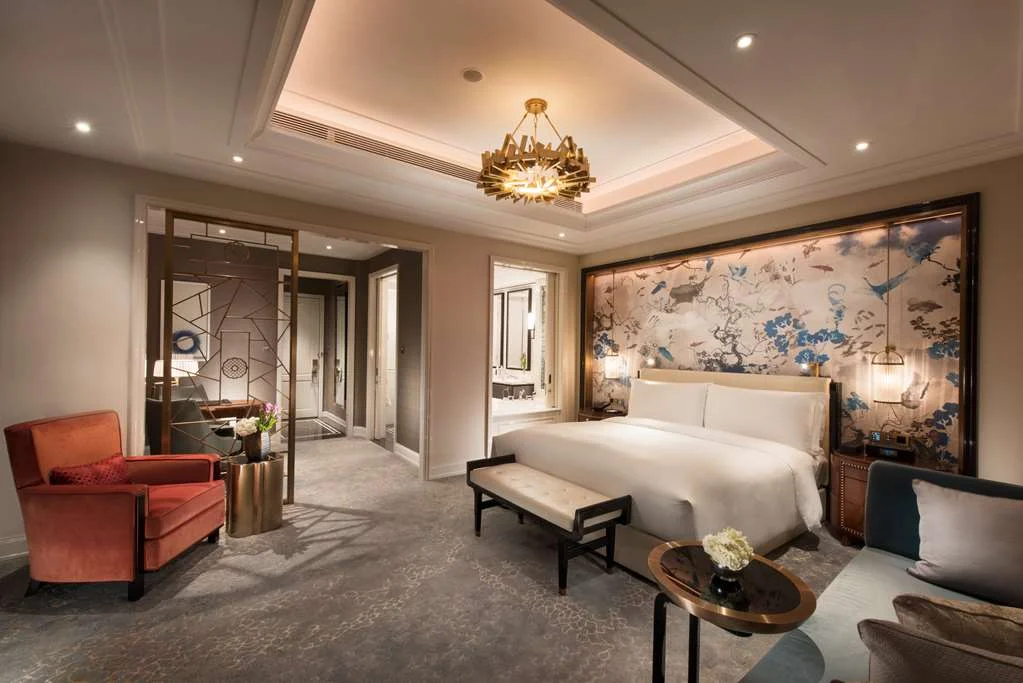
Waldorf Astoria Chengdu
When you book Waldorf Astoria Chengdu in China through our Hilton for Luxury partnership, your stay includes breakfast for two and a hotel credit of USD 100 per stay. You also receive a one-category room upgrade when available. You continue earning Hilton Honors points and elite night credits. No premium credit card or membership needed: request a quote and our advisor books it at the same rate as booking direct.
Exclusive Booking Perks
These perks are included with your stay at the same rate as booking direct with the hotel.
- VIP guest status
- Complimentary breakfast for 2 guests
- USD100 hotel credit per stay (or local equivalent)
- Double Hilton Honors Points
- Upgrade to next room category (subject to availability)
Location
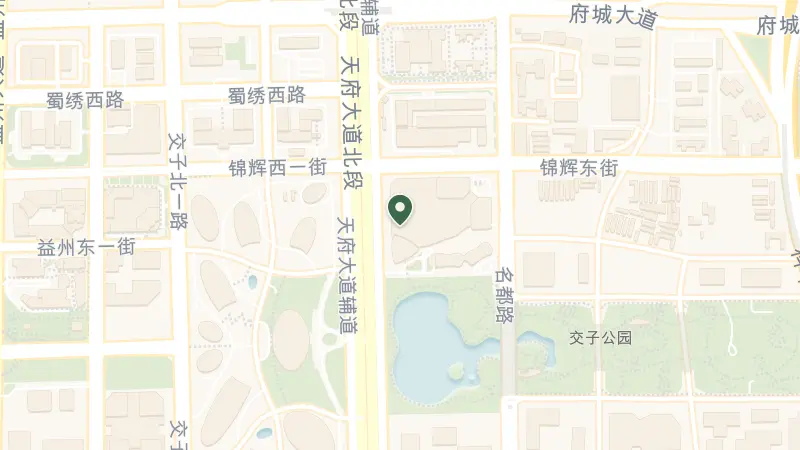
Waldorf Astoria brings its century-old hospitality legacy to Chengdu, a city where teahouse culture and contemporary ambition exist in easy harmony. This is the capital of Sichuan Province, where the scent of Sichuan peppercorns drifts from street stalls and temple courtyards sit beside glass towers. The property anchors the Jiaozi Gongyuan district in Guixi, a modern quarter that balances business infrastructure with pockets of green space along waterways.
Chengdu's identity has long been shaped by its agricultural wealth, fed by the ancient Dujiangyan irrigation system that still channels the Minjiang River across the fertile plain. The city moves at a slower tempo than Beijing or Shanghai, its residents famously devoted to mahjong, opera, and leisurely meals that stretch across afternoons. Giant panda research centres draw international visitors, but the city's real draw is its food culture, considered the most complex and punishing in China.
Chengdu Shuangliu International Airport sits twelve kilometres away, connected by metro and taxi. The newer Tianfu International Airport, forty-seven kilometres distant, serves as a secondary hub for the region.
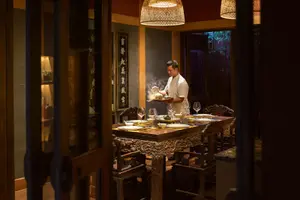
On-site, Infinite Luck delivers a masterclass in Sichuan cuisine under the guidance of a Chengdu-born chef with over thirty years of experience. His menu reads as a catalogue of the province's most revered dishes, from twice-cooked pork to tea-smoked duck with crackling skin and tender, smoke-kissed meat. Pre-order the latter for the full effect. Just seven hundred metres away, Xin Rong Ji holds three Michelin stars for its Taizhou repertoire, ingredients flown in daily to ensure premium quality, the dining room framing views of the Twin Towers through floor-to-ceiling glass.
For a pilgrimage deeper into Sichuan's culinary soul, Yu Zhi Lan awaits nine kilometres across the city. Owner-chef Lan Guijun has spent decades elevating regional cooking to haute cuisine in a rustic room filled with ceramics he shaped himself, no signage required; foodies know the way. Book well ahead. Beyond the table, the Dujiangyan Irrigation System lies sixty-four kilometres northwest, a third-century engineering marvel still channelling the Minjiang River across the Chengdu plain, inscribed as a UNESCO site alongside the mist-wrapped slopes of Mount Qingcheng. Yimin Marketplace, under three kilometres from the property, offers a ground-level view of daily Chengdu life: vendors selling produce, spices, and the season's best chillies.
Winter blankets Chengdu in grey mist, temperatures hovering near nine degrees in January, the city's famous fog softening the skyline. Spring arrives slowly, the air warming through March and April as magnolias bloom in the parks and teahouse terraces fill with locals cracking sunflower seeds.
Summer is oppressively humid, monsoon rains drenching the city from June through August, temperatures nudging thirty degrees but feeling hotter under the weight of the air. Locals retreat indoors or to air-conditioned malls, emerging only for night markets.
Autumn is Chengdu's golden season, September through November bringing cooler temperatures and clearer skies. The humidity breaks, the light sharpens, and the city's pace quickens. October, with highs around twenty-one degrees and infrequent rain, is the ideal window for travel.
Frequently Asked Questions

Quotes are personally reviewed by Natasha Hardy, founder of The Uncommon Traveller
5.0 rating · 8 Google reviewsThere is no fee or markup. The hotel pays our commission.
Request a Quote 32 Bib Gourmand